Prof. Steve Tadelis &

PRESENT
The economic potential
Blockchains

Learn frameworks that will allow you to evaluate the value of blockchain for specific applications
Understand how cryptocurrencies can provide an infrastructure for decentralized networks and how blockchains fit into the legal contract system
Taught by a University of Toronto, Professor of Entrepreneurship and Innovation with Co-Instructors including the Co-Founders of Libra and the blockchain itself!
Join a cohort of professionals passionate about the real applications of blockchain for their businesses

Josh Gans
Professor at the university of toronto

Christian Catalini & Scott Stornetta
cOfounder of libra & co-creator of the blockchain

5 x 2 hr sessions

Dates: 4 PM (PDT); December 1, 2, 6, 8 and 9

Price: $750 per seat (expense through L&D)
Learn from proven
academic & industry experts
with experience at




Engage with cohort members from
leading companies



Designed for those looking to go from 0 to 100 in the
Crypto Economy
Financial Professionals
Senior managers and venture analysts at institutional funds, investment banks and private equity.
What financial professionals will learn

Legal Professionals
Lawyers adopting contracting tech and advising regarding the adoption of smart contracting.
What legal professionals will learn:
Financial Professionals
Entrepreneurs who are developing applications in the blockchain space.
What founders will learn:
Meet your
Instructors
Josh is one of the leading experts in the economics of innovation and the impact of the digital economy. Joshua has written 14 books and is Professor of Strategic Management at the University of Toronto where he holds the Jeffrey S. Skoll Chair in Technical Innovation and Entrepreneurship. He is also Chief Economist of the Creative Destruction Lab where he directs its crypto/blockchain stream.
Outside of academia Joshua is a long-time advisor to startups and an expert witness testifying on issues of antitrust and intellectual property.
At the Creative Destruction Lab, Joshua plays a direct role in developing the strategy of startups and in ensuring that blockchain businesses are positioned to create and capture value. The Creative Destruction Lab is also a founding member of the Diem Association. In addition to blockchain startups, he has developed frameworks for evaluating startups in artificial intelligence, space and open science.

Christian Catalini is a co-creator of Diem (formerly Libra), and the Chief Economist of the Diem Association. Christian is also the founder of the MIT Cryptoeconomics Lab, and a Research Scientist at MIT. Christian's research focuses on blockchain technology and cryptocurrencies, and has been featured in Nature, Science, the New York Times, the Wall Street Journal, the Economist, WIRED, NPR, Forbes and more.



Scott Stornetta is touted as the co-inventor of the blockchain, together with Stuart Haber. Stornetta has spent decades contributing valuable research and published materials to the field of cryptography and distributed computing. He also consults, invests and sits on the board of many early stage technology companies.


What you get out of
This Course


This class is a mix of lecture-based theory and learning from the experts, who will discuss the unique challenges and opportunities in operationalizing the theory.

This course gives you access to a rich community of professionals, investors and founders in the blockchain and crypto space. Even after the course ends, you will continue to learn and build with each other.

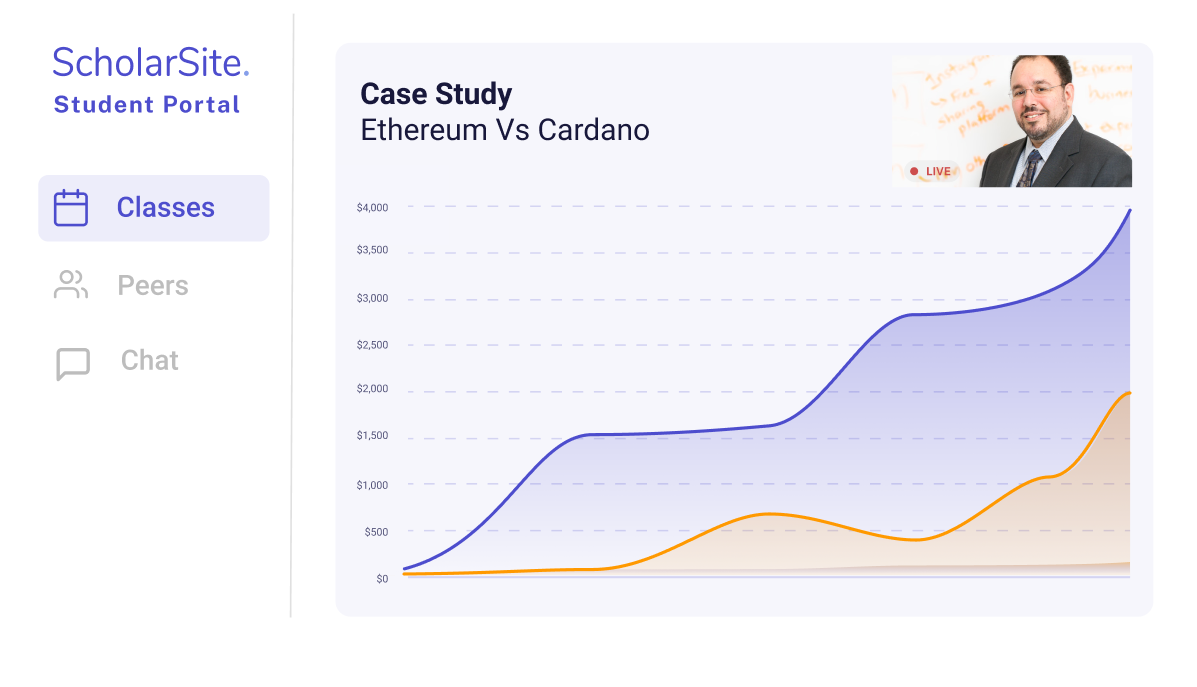
Get access to exclusive content through live sessions, meetups and our student portal. Learn and understand overall market and sector-specific dynamics, challenges and opportunities to create high-growth, high-value outcomes for startups, investments or organizations.


About Josh's
Live Cohort
Cryptocurrencies and the blockchain have attracted considerable interest and investment since the success of Bitcoin in providing the first viable (non-national) digital currency and Ethereum in providing the first decentralised blockchain application infrastructure. However, the hype has outstripped the reality and this has made it challenging to understand where the value of these significant innovations lie.
This course is about understanding that value. Why are cryptocurrencies a significant technological and economic advance? When does a blockchain add value beyond more centralised options such as large-scale databases? Should blockchains be viewed as independent of cryptocurrency tokens or inexorably tied together? What is the critical role of verification in contracting and how can the blockchain lead to a revolution in automated legal processes?
Taking an economics approach, you will examine in detail the economics of contracting and market design as the critical set of ideas that you need to understand how businesses might be able to adopt and take advantage of blockchain technologies. As this is a new space, the course will be of general interest with a goal of making this area accessible and for students to be able to discuss, debate and evaluate blockchain based technologies with greater authority. (Note: this is not a course about how to invest in cryptocurrencies).
Lecture 1 - The Blockchain as an Economic Innovation
Joshua Gans & Scott Stornetta | 1 December 2021
This lecture covers the terminology and operations of blockchains. What sort of innovation is it? How does the blockchain reduce the costs of verification and networking? What are limits on blockchains?


Lecture 2 - How Payments Drive Applications
Christian Catalini | 2 December 2021
How are cryptocurrencies evolving? Will cryptocurrencies solve the problem of global payments? What are the prospects for stable coins and also central bank adoption of digital currencies? What opportunities will these developments bring?
Lecture 3 - Blockchain Platforms & Market Design
Joshua Gans | 6 December 2021
Why is trust and verification so central to market operations? What are the risks associated with contracting in markets? How do blockchains allow for more security and lower legal costs than traditional methods of transacting? We will develop a blockchain canvas for breaking down transactions to understand the value of the blockchain.

Lecture 4 - The Economics of Smart Contracts
Joshua Gans | 8 December 2021
In this lecture you will learn about smart contracting and how they operate. Where can they supplant or augment existing contracting arrangements? How do economic mechanisms work? Why do many blockchain applications require innovations in economic mechanisms?

Lecture 5 - Innovating in the Blockchain Space
Joshua Gans | 9 December 2021
This lecture explores the main areas of activity in blockchain innovation. These include decentralised finance, contract payments, identity verification and scoring and supply chain management.